Google Chrome is a great browser, but it’s not great to your laptop’s battery. The more tabs you have open, the quicker your computer will run out of juice (although at a certain point, one more tab won’t make a difference for your already tanked battery, as a WIRED writer found out during a 2013 test). Now, Google is trying to fix the problem. The new version of Chrome dramatically reduces the percentage of CPU (central processing unit) your computer uses while running a large number of tabs in the browser. The result? Greater battery life and faster performance, according to Ars Technica UK.
Previously, you could download an extension like One Tab, which collapses all your open tabs into a list of links to reduce memory usage, but sometimes, you just need to be able to toggle between tabs while the pages are still loaded—especially if you’re working on a research project.
Chrome 57 increases how much the browser throttles background tabs, meaning it limits the amount of CPU that the tab can use. After 10 seconds of being in the background (so not the tab you’re actively looking at), Chrome limits how much processing power a tab can use to about 1 percent of each processing core, improving battery life. However, this doesn’t apply to some types of web pages, like those playing music.
As Sebastian Anthony writes for Ars Technica:
The Chromium team says it’s seeing ’25 percent fewer busy background tabs’ with the new throttling mechanism in place. Anecdotally, after updating to Chrome 57 and with about 20 tabs open, my laptop feels a lot more responsive. Switching between tabs feels a little quicker, and there seems to be less input lag when typing or otherwise interacting with the browser. I haven’t tested battery life yet, but it wouldn’t surprise me if there’s a significant improvement.
By 2020, Google plans to completely suspend background tabs from updating, rather than letting them continue running and using up CPU, a move that will likely increase battery life significantly. For now, however, Google estimates that Chrome 57 has led to 25 percent fewer busy background tabs.
You can update your browser by going to “About Google Chrome” in your taskbar.
Last week we attended “The Really Big Expo” in Myrtle Beach, SC where there was much discussion about the growing and changing food service options in C-Stores. We attended NACS “Ideas 2 Go” program discussion which showcased emerging concepts that redefine convenience stores. Another huge topic of conversation is how the millennials are changing the way people eat and shop. Gone are the days of a dried hot dog spinning on a warmer as your only option. C-Stores are ‘destination spots’ – not just a place to fill your tank. Bigger selections and healthier options are becoming the norm.
If you’ve seen the 2013 NACS Ideas 2 Go program, then you’ll recognize many of the retailers the NY Times visited: Thai Pan, Flory’s and Seoul Food D.C. Each establishment was part of a segment on some of the best gourmet ethnic food found at a single-store operation, and the retailers behind these businesses that deliver exceptional food and innovative new ideas.
“Encouraged by the changing tastes of consumers and the potential for profit, a metamorphosis has taken place in at least 1,500 locations nationwide: at independent gas stations as well as those owned by oil giants like Shell and Exxon and convenience store chains like 7-Eleven,” writes the NY Times, adding that “fresh produce, elaborate sandwiches and even grilled tilapia and Korean bibimbap” are becoming more ubiquitous at the local convenience store.
These locations “are now cool to discover and tell others about,” Jeff Lenard, NACS vice president for strategic initiatives, told the news source. In fact, the industry has come a long way from food offers that merely served up punchlines for movies such as “National Lampoon’s Vacation,” where Chevy Chase laments, “I’m so hungry I could eat a sandwich from a gas station.”
“We definitely see, year after year, convenience stores presenting a competitive threat to quick-service outlets like McDonald’s,” Donna Hood Crecca, associate principal at Technomic, told the news source. Citing NACS State of the Industry data (newly released numbers will be presented next month at the State of the Industry Summit), in 2015, about 34% of in-store profits at convenience stores came from foodservice, up from 22% in 2010.
Larger convenience store chains, such as Sheetz, are adding drive-thrus and touchscreen ordering kiosks to accommodate their growing foodservice operations. The NY Times writes that there’s also “an increasing number of roving food trucks” at c-stores, such as Andrae’s Kitchen, in Walla Walla, Washington (hot dogs, hamburgers and sandwiches), and the Brew Pump, in Asheville, North Carolina (eight beers on tap, beer garden and sandwiches).
“Food industry analysts now consider convenience markets competition for some of the most powerful names in the restaurant industry,” writes the NY Times, adding that an estimated 10% of the 154,000-plus convenience stores across the country—a $575 billion industry—“could be described as food-forward.”
LEESBURG, Va. — Last summer, when two women were looking for a restaurant space in this Northern Virginia town of 48,000, one of the options held multiple enticements: It was affordable, it had a good location, the kitchen was fit for Asian cooking and it was in a gas station.
They signed on the dotted line and retained the name of the previous business, Thai Pan. Now, while the brick exterior is connected to a Liberty gas station and resembles a well-fortified bunker, the authentic Thai fare served in a charming dining room is drawing locals and adventuresome foodies from throughout the region.
“People come in here and say, ‘Wow, I never expected something like this,’” said Wilaivan Kammoongkun, one of the women behind the new Thai Pan.
The restaurant is part of a wave of gas stations and convenience stores capitalizing on a growing demand for fresh, healthful and convenient road food. Encouraged by the changing tastes of consumers and the potential for profit, a metamorphosis has taken place in at least 1,500 locations nationwide: at independent gas stations as well as those owned by oil giants like Shell and Exxon and convenience store chains like 7-Eleven.
Photo
Wilaivan Kammoongkun helped open Thai Pan, which is attached to a Liberty gas station in Leesburg, Va., and serves authentic Thai fare. “People come in here and say, ‘Wow, I never expected something like this,’” she said.CreditAndrew Mangum for The New York Times
As a result, roller-grilled hot dogs and little packaged cakes of indefinite shelf life are, in many places, giving way to fresh produce, elaborate sandwiches and even grilled tilapia and Korean bibimbap. Popular food trucks and food carts are adding to the variety, many setting up shop just feet from gas pumps to take advantage of a steady stream of customers.
The locations “are now cool to discover and tell others about,” said Jeff Lenard, vice president for strategic initiatives at the National Association of Convenience Stores.
It certainly hasn’t always been this way. In fact, convenience store food regularly stood in as a joke. In the 1983 film “National Lampoon’s Vacation,” a hapless dad behind the wheel of a station wagon, played by Chevy Chase, laments, “I’m so hungry I could eat a sandwich from a gas station.”
Major oil companies still tend to shy away from the complicated and risky food business. But in the early 2000s, when a long-term decline in revenue from food, gas, cigarettes and other products approached troublesome levels, many gas station and convenience store owners started to rethink their business models.
Now, an estimated 10 percent of the 154,000 convenience stores across the country — a $31 billion industry — could be described as food-forward, the National Association of Convenience Stores says.
Photo
Flory’s, a family-owned enterprise, has four locations. “We were apprehensive about doing this because we were not sure about customers wanting to eat in a convenience store,” said Jamy Flory, a co-owner and vice president of the business.CreditHiroko Masuike/The New York Times
The largest chain, 7-Eleven, with 10,900 stores in North America, has been polishing its game for more than a decade. Nearly all of its fresh food, heavy on fruits and vegetables, is prepared in regional commissaries.
The service station strategy appears to be working: In 2015, about 34 percent of in-store profits at convenience markets came from food and beverage service, up from 22 percent in 2010, according to the trade organization. Food industry analysts now consider convenience markets competition for some of the most powerful names in the restaurant industry.
“We definitely see, year after year, convenience stores presenting a competitive threat to quick-service outlets like McDonald’s,” said Donna Hood Crecca, associate principal at Technomic, a research company that follows the food industry.
Upgraded convenience stores are found across the country, especially on the East Coast and in the Midwest. Greater Dallas and the area around Harrisburg, Pa., are two hubs. The Tigris and Euphrates of the genre, though, might be the region in and around Washington. Here, one can feast on a variety of treats, including house-cured corned beef, Thai specialties, regional Mexican fare, homemade pizza, fried chicken and barbecue.
In 2012, Jon Rossler had the opportunity to permanently park a corned beef food truck at an Exxon station in Olney, Md., north of Washington.
Photo
Thai Pan draws both local people and adventuresome foodies from throughout the region.CreditAndrew Mangum for The New York Times
The following year he moved inside, opening a spiffy 20-seat restaurant with faux brick walls, granite counters and large computer screen menus. Today, Corned Beef King goes through 150 pounds of corned beef and pastrami weekly, and 100 pounds of brisket. The business started with two employees; today there are 16.
“It’s wild,” Mr. Rossler said. “I think I may have gotten too big.”
Occupying part of an Exxon station in suburban Silver Spring, Md., is Seoul Food D.C., a cheerful, three-year-old art-festooned cafe serving gorgeous Korean dishes like bibimbap (sticky rice with vegetables, greens, a sunny-side-up egg and choice of protein) and the super bowl (rice, caramelized kimchi, spicy relish, two cheeses and Korean red sauce).
The experimentation also extends to the Hudson Valley town of Fishkill, N.Y., and the family enterprise Flory’s, which has four locations.
At first glance, especially at night, one of its stores — sleek and modern and large at 1,900 square feet — resembles a small casino with 14 gas pumps.
All food is made in-house: sandwiches, salads, soups and prepared meals. There is also a healthy fare section and make-your-own-milkshake machines. Two cooks toil in a small open kitchen preparing specialties like chili, lasagna, quesadillas, fried chicken and stuffed sole. Breakfast begins — with 16 types of coffee — at 4 a.m.
Photo
Recent offerings at Flory’s included macaroni and cheese, vegetables, rice, chicken stew, fried chicken and French fries.CreditHiroko Masuike/The New York Times
Jamy Flory, a co-owner and vice president of the enterprise, said the concept had succeeded beyond his most sanguine expectations. When he first opened, he said, the meat and cheese purveyor Boar’s Head was reluctant to be associated with a gas station. Flory’s is now a regular customer.
“We were apprehensive about doing this because we were not sure about customers wanting to eat in a convenience store,” Mr. Flory said.
Taking cues from fast-food restaurants, many convenience stores are also providing drive-through windows and ordering kiosks. Sheetz, a chain of 541 gas stations based in Pennsylvania, has a store near Harrisburg that welcomes customers to relax outside at umbrella-shaded tables that afford the exhilarating view of automobiles being topped off.
There is also an increasing number of roving food trucks at service stations, among them Andrae’s Kitchen, in Walla Walla, Wash., (hot dogs, hamburgers and sandwiches), and the Brew Pump, in Asheville, N.C. (eight beers on tap, beer garden and sandwiches).
“We want to be about good food but also about some fun,” said Mr. Flory, proudly showing a customer his arctic-themed “beer cave” with a giant simulated polar bear on top. (It’s where beer inventory is kept.) “People get a kick out of it, so why not?”
Since the October 2015 liability shift, EMV remains frustrating for retailers and confusing for consumers—not a good proposition leading up to the next liability shift in October 2017.
October 3, 2016
ALEXANDRIA, Va. – One year after the October 2015 liability shift took effect for retailers to accept Europay MasterCard Visa (EMV) chip cards inside the store, thousands of chip readers have yet to be activated. To make matters more frustrating, the next liability shift—for fuels dispensers—is one year away.
Convenience retailer investments in EMV are not preventing fraud because chip cards in the U.S. are not enabled for PIN authentication, which is the most effective way to combat fraud, ensuring the customer using the card is the owner of that card. In the United States, the convenience store industry processes 160 million transactions each day and invests billions to reduce fraud at the point of sale. For example, many retailers pay to use customers’ ZIP codes to verify a transaction to protect their customers and their business. Retailers have real incentives to eliminate payment card fraud because they, according to the Kansas City Federal Reserve, absorb 80% to 90% of all fraud losses on credit and debit card transactions.
Convenience retailers will spend more than $7 billion on EMV—or just under 70% of industry pre-tax income for 2015—to upgrade and replace software and equipment to accept chip cards, but the card companies prevent retailers from requiring the use of PINs to verify the cardholder and protect against fraud. Without the protection of a PIN number on transactions, consumers and retailers are vulnerable to fraud.
Leading up to the October 2015 deadline, the card networks were late providing the necessary software specifications to accept EMV transactions. Retailers then needed certification from each card network before they could activate EMV. There were bottlenecks for both, compounded by the fact that the card networks set a liability shift timeframe without regard to the ability of equipment manufacturers and software providers to actually meet the deadline—a problem that will undoubtedly turn out to be even worse at fuel dispensers.
Nearly a year ago, NACS Board member Jared Scheeler, managing director of The Hub Convenience Stores Inc., testified before Congress that his chain of four North Dakota convenience stores had spent roughly $134,500 to install POS and pump card readers that accept EMV chip transactions. At that time, NACS estimated that the average transition cost would be more than $26,000 per store, compared with an average profit of $47,000 per year.
Since the October 2015 EMV liability shift, many retailers have also been experiencing an outrageous increase in chargebacks, mostly erroneous. Counterfeit chargeback liability is unknown, and has not been divulged by Visa and MasterCard, despite industry efforts for clarification.
Last week the Merchant Advisory Group (MAG) sent a letter to Visa and MasterCard regarding ongoing challenges with the EMV transition for in-store deployments, and highlighted concerns regarding the feasibility of the payments industry being ready for the October 1, 2017, liability shift for fuel dispensers.
“Compounding the financial burden for small merchants is the liability shift already in place for in-store EMV transactions under which chargebacks have far exceeded expectations. And for larger retailers with many stores and multiple pumps at each location, the expense is staggering,” MAG wrote in the letter.
The NACS Show is just two weeks away, so if you want to learn everything you can about EMV, its hurdles and how to prepare for the next October 2017 liability shift, do not miss out on the education, guidance and discussions that will take place during the event.
Here’s how you can maximize your time at the NACS Show learning more about EMV:
Talk to NACS government relations staff and general counsel in the NACSPAC Lounge.
On Capitol Hill, most of the efforts have so far focused on the aftermath of a data breach and notification requirements. NACS is urging policymakers to consider not only what happens after a data breach occurs, but also how to prevent breaches and fraud from happening in the first place. Protecting against fraud should be a top priority for all forms of payment, including mobile payments, and the best way to authenticate transactions is through a PIN or more advanced means.
NACS is advocating that retailers should have the option to require PIN on credit and debit card transactions and those that occur on a mobile device—the same protection banks require at ATMs.
PIN is the most secure authentication technology currently available and can be implemented now. All EMV chip-card readers are PIN-enabled with encryption security. When PIN is required, whether a card number or the card itself is stolen, a PIN protects consumers against fraud.
Bottled Water is the trend and big seller. Depend on backOffice™ Software for proper pricing and inventory. How about a mix and match promotion? Keep your shelves hydrated!
Concerns about health and lead contamination in drinking water are likely fueling the trend.
August 3, 2016
WASHINGTON, D.C. – Bottled water will outshine soda for the first time in U.S. history in 2016, spurred by its convenience and fears over tap water, Bloomberg reports. A previous report found that bottled water consumption grew 120% between 2000 and 2015.
The nation’s largest bottled-water producers (Coca-Cola Co., Dr Pepper Snapple Group, Nestle Waters and PepsiCo Inc.) point to Americans desiring portable, calorie-free beverages, but predict the trend will continue because of concerns over contaminated drinking water.
Communities in Flint, Mich., Newark, N.J., and Washington, D.C. are struggling to replace corroded pipes that have leached lead into tap water. “Concerns in places like Flint do bring bottled water to people’s attention as a safe and sealed source of drinking water,” said Jane Lazgin, a spokeswoman for Nestle Waters North America. The U.S. Environmental Protection Agency forecasts a whopping $384 billion is needed to maintain or replace essential components of the nation’s water infrastructure over the next decade or so.
Euromonitor expects Americans to down 27.4 gallons of bottled water in 2016, 1.2 gallons more than carbonated soft drinks. That switch hasn’t impacted the bottom line of soft drink manufacturers because many of them have expanded into bottled water.
For more on packaged beverages (including bottled water), read “The Workhorse” in the August 2016 issue of NACS Magazine.
Visa Global Payment System Risk is aware of increasing incidents involving suspects placing skimming devices on point-of–sale (POS) terminals for the purpose of collecting payment card information, including PIN numbers. Perpetrators use this information to create counterfeit cards re-encoded with the stolen card information and make unauthorized ATM withdrawals. The primary targets for these recent skimming events are self-checkout terminals in supermarkets. However, any POS terminal may be at risk, including those that are often unattended, such as terminals near deli counters, coffee stands, etc. The perpetrators are mobile and will target multiple stores within a geographic area for a period of time before moving on to a new location. Most entities targeted are using payment devices that have not yet been upgraded to accept EMV cards.
Placement of Skimming Devices
Skimming devices can be placed at any time of the day but placement usually occurs during slower times of business when the perpetrators can go undetected by employees or other customers. The perpetrators will usually work in teams of two or more with one person being a lookout, one person placing the skimming device on the POS terminal and another creating a barrier so that no one can observe the skimming device being placed. Perpetrators have been known to use large items such as packs of paper towels to block the view of POS terminals. In some instances, it was reported that the suspects created a distraction in the store by faking a medical incident or causing commotion that distracted the attention of store personnel away from the POS terminals. The skimming devices will mimic the look of the front of the POS terminal.
Recommended Inspection & Response Actions
1. Prevention Through Device Inventory Management
In accordance with PCI DSS Requirement 9.9, ensure implementation of security controls to protect POS devices from tampering and substitution. Examples include:
⇒ Maintain a list of devices including the device serial number or other method of unique identification.
⇒ Keep a list of device location either by store or physical location within the store itself (i.e., self-checkout, deli counter, manned checkout).
⇒ Train personnel to be aware of suspicious behavior and to report tampering or substitution of devices.
⇒ Verify the identity of any third-party persons claiming to be repair or maintenance personnel, prior to granting them access to modify or troubleshoot devices.
2. Physical Inspection of POS Devices
Implement security procedures to inspect POS devices at least twice each day and at random times.
Physically examine the device. Skimming devices are typically attached with minimal adhesive allowing them to be place and removed with ease, so devices may be detected by giving the front of the POS/PED a good grab-and-pull. Weighing the devices may also identify tampering.
Please note some skimming devices are Bluetooth enabled and data can be captured without the device needing to be recovered.
When inspecting devices, use backup security personnel to monitor from a distance as suspects may watch compromised terminals and suspects are trained in counter surveillance to avoid detection/arrest.
3. Device Recovery Response
If a skimming device is discovered on a POS terminal, do not handle it, as evidence may be damaged.
Notify local law enforcement and the FBI or USSS office so they can recover the skimming device.
Protect any video surveillance that may be used to identify any perpetrators and confirm timing of when the device was placed on the POS terminal.
Initiate incident response procedures and notify your Acquirer so that Visa can assist with the investigation.
Information from VISA April 2016
For other questions, please contact Cyber Intelligence & Investigations via email at USFraudControl@visa.com
Beginning January 12, 2016, only the most current version of Internet Explorer available for a supported operating system will receive technical support and security updates. Internet Explorer 11 is the last version of Internet Explorer, and will continue to receive security updates, compatibility fixes, and technical support on Windows 7, Windows 8.1, and Windows 10.
Internet Explorer 11 offers improved security, increased performance, better backward compatibility, and support for the web standards that power today’s websites and services. Microsoft encourages customers to upgrade and stay up-to-date on the latest browser for a faster, more secure browsing experience.
What does this mean?
It means you should take action. After January 12, 2016, Microsoft will no longer provide security updates or technical support for older versions of Internet Explorer. Security updates patch vulnerabilities that may be exploited by malware, helping to keep users and their data safer. Regular security updates help protect computers from malicious attacks, so upgrading and staying current is important.
Potential risk of using older versions of Internet Explorer:
Security
Without critical browser security updates, your PC may become vulnerable to harmful viruses, spyware, and other malicious software which can steal or damage your business data and information.
Compliance
Businesses that are governed by regulatory obligations such as HIPAA should conduct due diligence to assess whether they are still able to satisfy compliance requirements using unsupported software.
Lack of ISV Support
Many Independent Software Vendors(ISVs) no longer support older versions of Internet Explorer. For example, Office 365 takes advantage of modern web standards and runs best with the latest browser.
By Jennifer Bulat, Group Director of Editorial Production, CSP 18
DALLAS —Did you know that people buy chocolate with just about anything else in the store?That people have had $700 more in their accounts since last year? And that customers shop a convenience store in the evening the way they do a small grocery store?
In the session “Boosting the Convenience Market Basket” at CSP’s Convenience Retailing University, Don Burke, senior vice president of Management Science Associates Inc., Pittsburgh, analyzed data compiled from three convenience-store retailers and offered these tips:
That $700 extra consumers have comes from lower gas prices. While in-store sales are up 3% as a result of customers spending less on fuel, “You have to work a little harder to get that money now,” Burke said.
Revenue from fuel sales is down, but dollars from those sales aren’t down as much because people have been “buying up”—purchasing higher-octane gasoline instead of regular. However, 85% of fuel customers don’t buy anything in the store. How can you get them inside?With signage promoting the top in-store categories. (See No. 9.)
Speaking of those categories, some of the fastest growing (in the latest 13 weeks of data vs. the same time a year ago) are wine (up 12%), beer (10%), cold vault/energy drinks (9%) and ice cream (8%). Many of these are up as a result of consumers wanting to treat themselves via the extra cash they have, Burke said.
And more on wine: The “sweet spot”price for wine in the c-store is $8 to $12, and the wine market basket is $18.62 on average. However, Burke says some folks are willing to spend $24.99 for a good bottle.Make sure customers know you have high-quality items and some may bite. Even better: Many of those who purchase wine buy hard liquor with it, so make sure the displays are close together.
Two other complementary liquids: water and carbonated soft drinks. “Always leverage and market your cold case together” for bundling opportunities, Burke said.
Who knew? People tend to buy a newspaper when they buy a lottery ticket, according to MSA data. “If you want to sell more newspapers, put it near the lottery machine,” he said.
Most beer is purchased between 3 and 11 p.m., usually when folks are on the way home from work. “Put a six-pack on your (checkout) countertop just to remind them,” Burke said.
Total store sales peak between 4 and 5 p.m. And sales of milk spike in the later hours. “People shop c-stores in the evenings the same way they do a small grocery,” he said.
In a market-basket analysis of the top categories, chocolate always pops up as something customers will buy with another product. Those fuel customers who don’t come into the store (see No. 2) might be lured inside by a promo on chocolate candy.
Thirty-six percent of customers who buy beer make that their sole purchase. The category purchased second most often with beer? Family planning. Safety first!
Finally, it’s not just hype: MSA numbers show stores that offer foodservice have 2% higher sales than those without. And when people purchase foodservice, they buy something else 82% of the time.
Advocacy cards. They don’t have quite the same ring as loyalty cards do, but maybe get used to the idea?
While advocacy cards are not a living, breathing thing, advocating for customers is fast becoming the new way retailers should approach customer relationship-building beyond simple loyalty efforts.
While a loyalty card program rewards consumers for quantity of goods and services bought, advocacy cards could go a step further to inform the qualitative aspect of the retailer-customer bond— rewarding shoppers who buy healthy foods, for example, with points, gift cards or other incentives.
Sounds like a daunting task for a retailer, but it’s one that all retail channels should think about.
Retailer advocacy for customers was discussed during the webinar “Top Food Trends for 2016.” Sponsored by The Food Institute and BMO Harris, the session was comoderated by Phil Lempert, known as the “SupermarketGuru,” and The Food Institute CEO Brian Todd.
In addition to citing consumers’ thirst for additional product information along with coming to grips that the “retail world is in flux,” Lempert said advocacy might be the new loyalty. In that spirit, “focus beyond relationships and think beyond loyalty to advocacy,” he said.
Your consumers are already vigilant when it comes to the food selection process—like vetting a political candidate. They abide by concepts of “free from” and “less is more,” the latter meaning products with five or fewer ingredients and no artificial ingredients. Foods labeled with health attributes saw sales increase 13%, said Lempert, citing the National Grocers Association-SupermarketGuru 2015 survey.
The broad picture: A new way of eating will be defined by new proteins, algae, insects, vegetable, yeast, cricket flour and nut powders. Rewarding your customers for participating in the trend could incentivize those higher-margin items, and earn you goodwill and higher sales in the process.
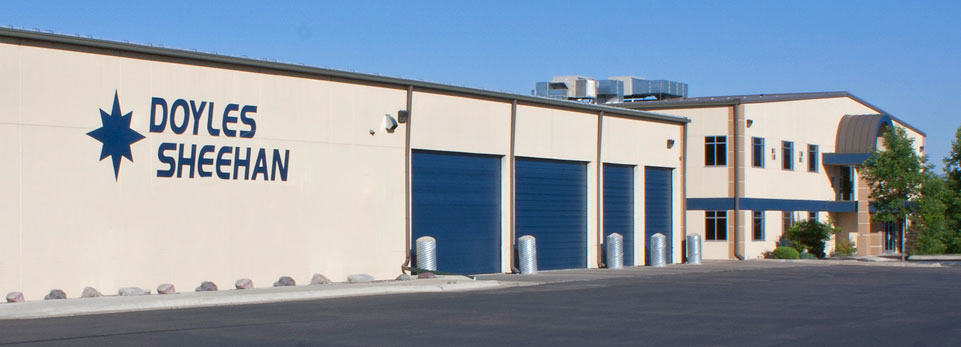
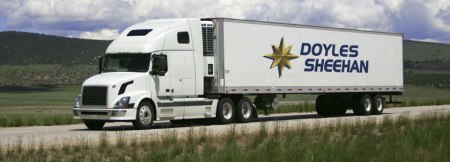
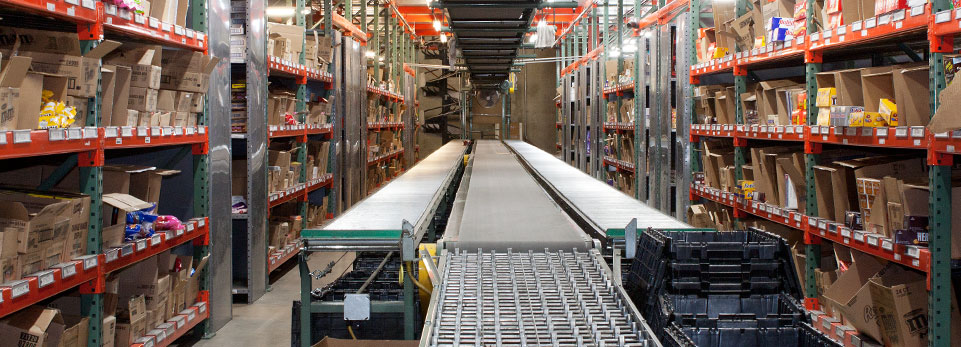
For more than 35 years, Doyles Sheehan has been a full-service distributor of food service, convenience and grocery products to a diverse customer base throughout the greater Northwest. DS has customers throughout Oregon, Washington, Idaho, Montana, Wyoming and North Dakota. They know how to compete effectively in the wholesale industry while always keeping their primary focus on the customer. I saw this first hand as InsightRS was invited to attend their Annual Tradeshow in Coeur d’Alene, Idaho.
This family-owned and family-operated company, is nothing short of top-notch. They reach far beyond simply selling products to their customers. They truly know the importance of traditional, dependable and superior service. They show daily that these core values, combined with sophisticated inventory, ordering, delivery and marketing systems are crucial to success for them and their customers.
So were does InsightRS fit in?
Electronic Data Interchange
or simply put ‘EDI‘
EDI refers to the transfer of electronic data. Our EDI Module allows Doyles Sheehan customers to import their invoices directly into backOffice™ Software electronically from Doyles Sheehan. Gone are the days of spending HOURS on data entry to update pricing and receiving orders. Once imported, backOffice™ will identify new products received from Doyles Sheehan, any price or cost changes and the quantity shipped of each item. With the click of a button, new items are added, price and cost changes are made, and an order is created in the inventory module!
The low cost of this module added to backOffice™ Software will very quickly pay for itself in hours saved on data entry and missed price changes. Join the other Doyles Sheehan customers and start growing your business the easy way!


 Posted by InsightRS










 Insight Retail Software Blog